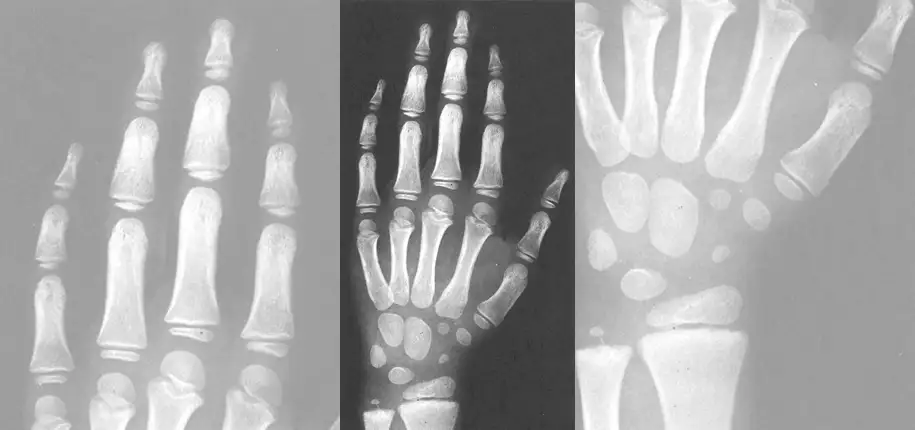

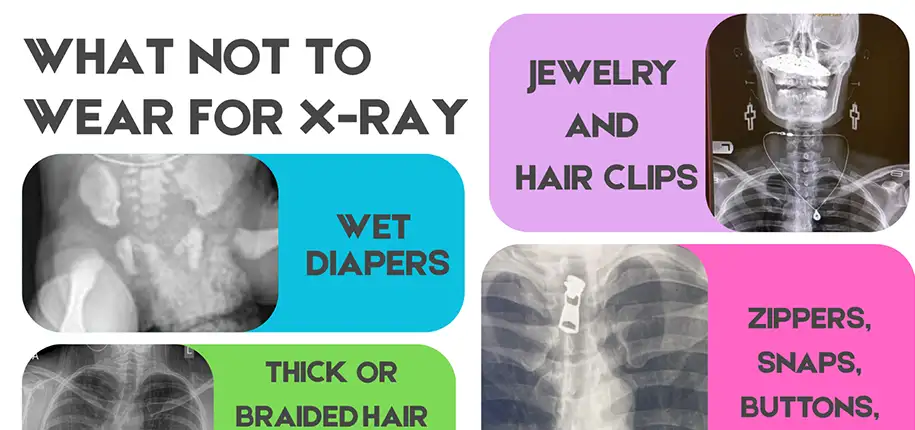
X-ray imaging is one of the most common and important diagnostic tools in healthcare. It works by sending a small amount of radiation through the body to create detailed images of bones, organs, and soft tissues. For the images to be clear and accurate, the area being examined must be free of anything that could block or distort the X-ray beam.
That’s why certain clothing items and accessories can interfere with the exam—even items that seem harmless. Removing or avoiding them helps ensure the radiologist receives the best possible images, which leads to better diagnosis and care.
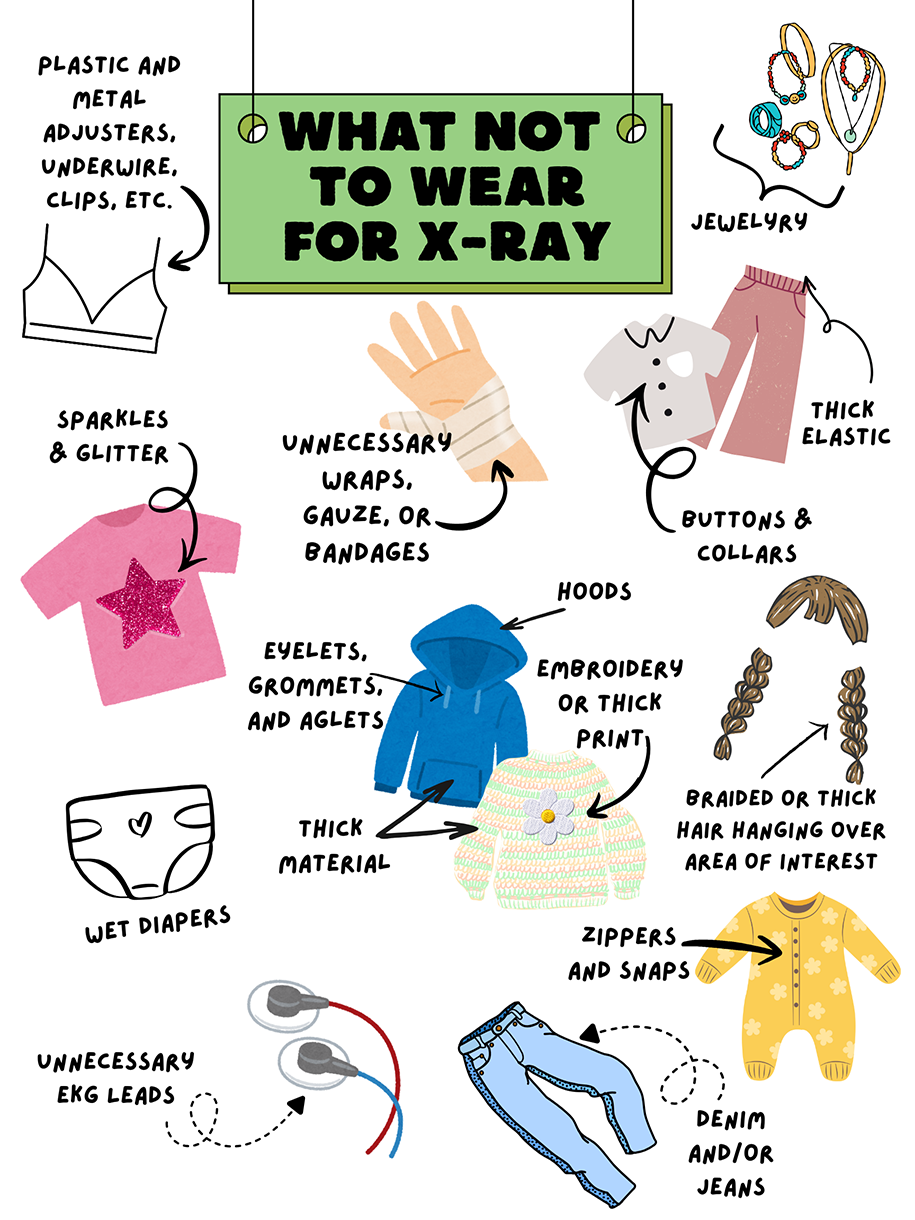
Below is a friendly guide explaining why these items should not be worn during an X-ray examination.
Jewelry
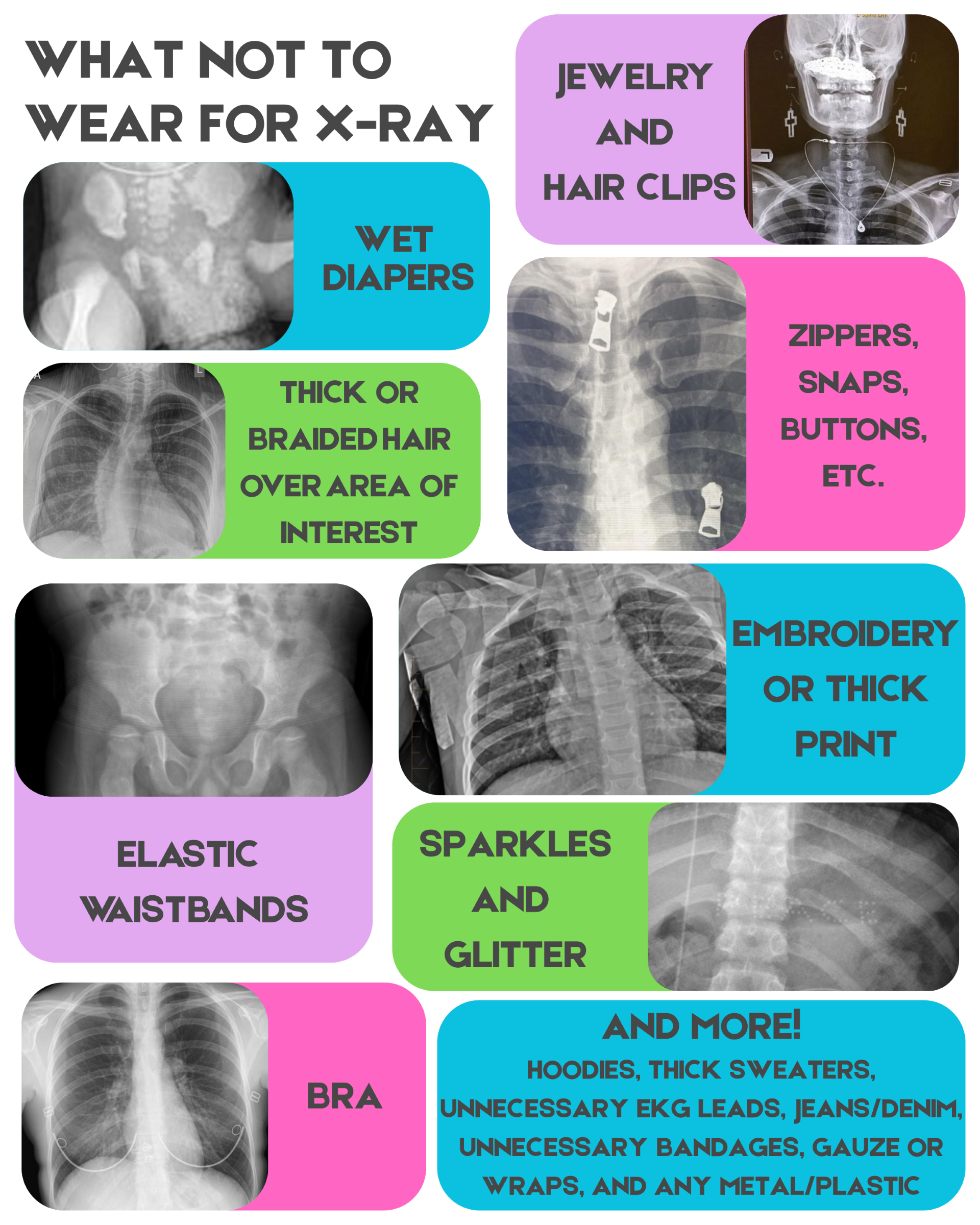
Necklaces, earrings, bracelets, rings, and body piercings can block the X-ray beam and create bright white artifacts on the image. These artifacts can hide important anatomy or mimic medical problems, making interpretation more difficult.
Plastic and Metal Adjusters, Underwire, and Clips in Undergarments
Bras with underwire, sports bras with plastic adjusters, and shapewear with clips or hooks can all interfere with imaging. Even small pieces of metal or thick plastic can create shadows or streaks that obscure the area being examined.
Sparkle, Glitter, or Metallic Designs on Clothing
Many shirts, dresses, and leggings include glitter, sequins, or metallic threads. These decorative elements show up on X-rays as bright spots or streaks, which can distort the image or hide important details.
Unnecessary Wraps, Gauze, or Bandages
Unless medically required, extra layers of bandaging can create thick areas that block the X-ray beam. This can make it harder to see the underlying anatomy clearly. If a wrap is needed for medical reasons, the technologist will adjust the imaging technique accordingly.
Thick Elastic Clothing
Items like compression leggings, tight waistbands, or thick elastic bands can create dense areas on the image. These can mimic abnormalities or make it harder to see soft tissues.
Buttons and Collars
Shirts with buttons, snaps, or stiff collars can interfere with chest, neck, or spine imaging. Metal buttons in particular can create large artifacts that block key structures.
Braided or Thick Hair Over the Area of Interest
Hair may not seem like a problem, but thick braids, hair ties, beads, or buns can obscure the skull, neck, or upper spine during imaging. Pulling hair away from the area being examined helps produce a clean, readable image.
Wet Diapers
Wet diapers contain moisture and absorbent gel that appear dense on X-rays. This can block the view of the pelvis, abdomen, or lower spine. A dry diaper—or temporary removal—helps ensure a clear image.
Unnecessary EKG Leads
If EKG leads are not needed for monitoring during the exam, they should be removed. The metal in the leads can create circular artifacts that interfere with chest or abdominal imaging.
Zippers and Snaps
Zippers, snaps, and metal fasteners are common culprits in producing streaks or bright spots on X-rays. Clothing with these features often needs to be changed for a gown to avoid image distortion.
Denim or Jeans
Denim is thick, tightly woven, and often reinforced with metal rivets. Even without metal, the fabric itself can block or scatter the X-ray beam. For exams involving the abdomen, pelvis, or spine, jeans almost always need to be removed.
Why This Matters
Clear X?ray images are essential for accurate diagnosis. When clothing or accessories interfere, it may:
This is why we have our patients change into a hospital gown—helps ensure the safest and most effective imaging experience.

Glenn Miñano is a media specialist in the Department of Radiology, providing graphic design, photography, printing, video services, and administration of the department’s online properties. His works have been published in several medical articles, such as the American Journal of Radiology and the American Institute of Ultrasound. He has been providing these services to the Radiology Department since 1996.

Editor: Meredith Towbin